Clayton Logo

                            Solvent Recycling, Distilling, Parts Washing

Clayton Equipment Company offers a full range of products for your solvent recovery/recycling and parts washing needs.


Solvent recoverySolvents

There are 3 types of solvents: oxygenated, hydrocarbon, and halogenated.

Oxygenated solvents include such products as ketones, glycol ethers, and alcohols.

Hydrocarbon solvents tend to be distilled to suit an intended purpose. This means the composition of the solute, color, and smell of the final product will vary greatly, depending on the purpose for the final product.

Halogenated solvents are actually hydrocarbon solvents that have undergone a chlorinating process.

Why recycle your own solvent?

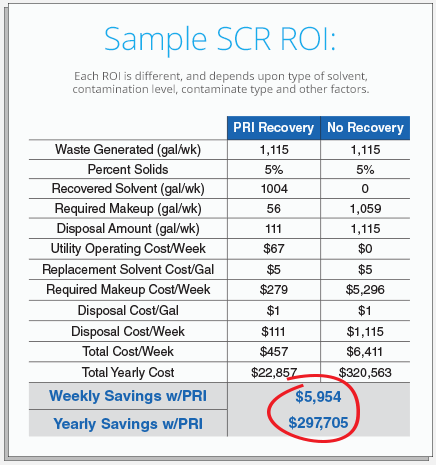
  • It is possible to save as much as $2 per gallon over outside recovery services.
  • Reuse up to 85-95% of your waste solvent.
  • Reduce removal and disposal costs.
  • Control the quality of the reclaimed solvent.
  • Reduce the liability of the waste solvent that leaves your plant (cradle-to-grave).
  • EPA compliance.

Information needed to assess solvent recovery application:

  • How is the waste generated?
  • How much waste in gallons per week?
  • What % amounts of what chemicals are in the waste?
  • What is the water content %?
  • What is the solids content %? What type?
  • Is nitrocellulose present? What %?
  • What is current recovery method and what cost??
  • What is the current disposal method and what cost?
  • How much virgin material is purchased annually? Gallons? Cost?
  • What future changes are expected?

Solvent Recovery SCSolvent Recovery SC

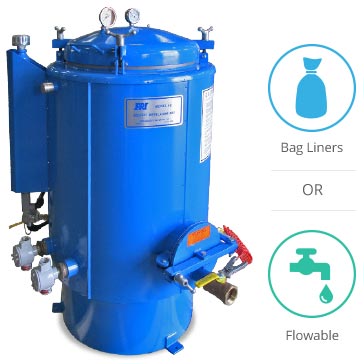
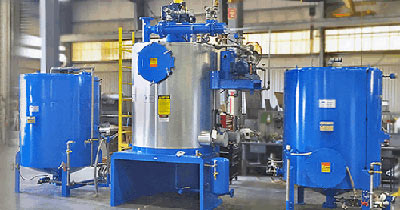
For waste solvent with less than 20% solids content, the PRI SC units are available with capacities from 10 to 220 gallons. These are safe and easy to use units for either batch or continuous operation.

Generating greater than a drum per week of waste solvent can make a solvent distillation unit a viable alternative to off-site disposal or recovery.

Safety features include intrinsically safe sensors, explosion proof electronics, and compliance with NFPA and NEC codes.


Solvent Recovery SCRSolvent Recovery for High Solids Content SCR

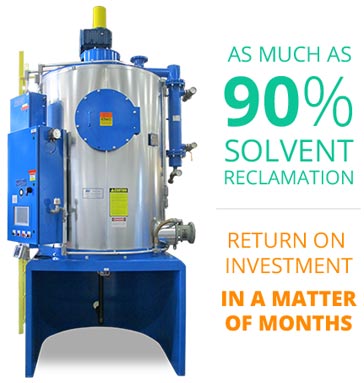
For dirty solvent with high solids content,an exclusive rotating scraper blade assembly is incorporated to assure optimum efficiency and consistent clean solvent production throughout the recycling process.

All systems are available with a wide range of options to suit specific application needs. Vacuum or atmospheric distillation systems, solvent storage tanks, pumps, automated control systems and Nitrocellulose safety packages are just a few examples.

With operating capacities to 800 gallons and recovery rates up to 140 GPH, these models are designed for broad applications across a variety of markets, including aerospace, paint and coatings, printing, converting, manufacturing and automotive.

These solvent recovery units are elevated, with a cone shaped bottom facilitating sludge discharge into a 55 gallon drum for easy disposal. All models are constructed for Class I, Division 1, Group D environments using a combination of intrinsically safe sensors and explosion-proof electrical components. Units are available with an electrically heated oil jacket or an ASME steam-heated jacket. Each system is manufactured to comply with NFPA and NEC codes applicable to the vessel and installation. A Programmable Logic Controller (PLC) monitors the unit’s operation, and an exclusive Process Performance Control (PPC) software package provides maximum throughput and solvent recovery while minimizing wastes requiring disposal.


Solvent Recovery LSRSolvent Recovery for Large Applications LSR

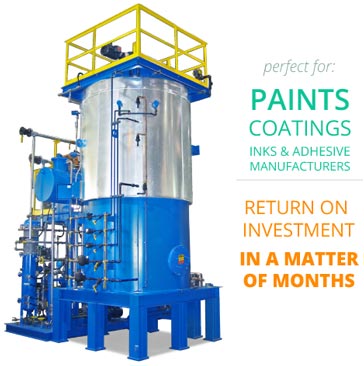
The Series LSR solvent distillation units, the heavy-duty work horse of the PRI line, is built to handle difficult and large scale waste streams. An ASME Code, stainless steel vessel houses the patented rotating scraper assembly that continually scrapes the sidewalls to assure optimum heat transfer efficiency and optimum output rate.

The LSR solvent recycling units achieve maximum efficiency with a Programmable Logic Controller (PLC) and PRI's exclusive Process Performance Control (PPC) software is built to process a continuous feed of high particle laden solvent with solids content up to 35%. With recovery rates up to 500 GPH, it is designed for high volume applications such as paint and coatings manufacturers.


Parts WasherParts Washing Systems

PRI parts washing systems are large, industrial duty, enclosed chamber wash systems designed for washing flexographic and gravure press parts and a variety of other applications.

These systems minimize make-ready time and reduce employee exposure to cleaning chemicals. They also reduce chemistry costs, reduce manpower requirements and reduce environmental emissions.

All parts washing systems are "end load" designs in which parts are loaded onto mobile carts and pushed into the unit for a four step cleaning process. Full automation allows operating personnel to perform other duties while the system is in operation.

Solvent Closed LoopSolvent based systems can include integral solvent recovery systems allowing continuous reuse of the solvent wash solution. An integral VOC reduction system captures solvent fumes for reuse minimizing fugitive emissions.

Non-flammable cleaning solvents can be used that have low emmissions and will clean solvent and water based inks, adhesives and top coats.

For removal of water based chemistries, consider the PRI washer models that use water and detergents as the cleaning solution.

Benefits

  • Safer than Hand Washing.
  • No employee contact with liquids.
  • Reduced respiratory exposure.
  • No open containers of flammables.
  • Lower VOC’s than hand washing.
  • Wash solvents are recycled on site.
  • Reduces disposal volume.
  • Lower labor cost than hand washing.
  • Reduces solvent inventories and purchases.
  • Cleaner parts reduce downtime.

Back to Top of Page.

plant01d

news

The Texas Commission on Environmental Quality (TCEQ) has approximately 3,000 employees, 16 regional offices, and a $463.9 million budget.

The Environmental Protection Agency (EPA) employs 18,000 people across the US, with HQ in DC, 10 regional offices, and more than a dozen labs. The EPA Administrator is appointed by the President of the US and has a budget of $7.6 billion.

Check our environmental page for equipment that will help your company remain in compliance.